
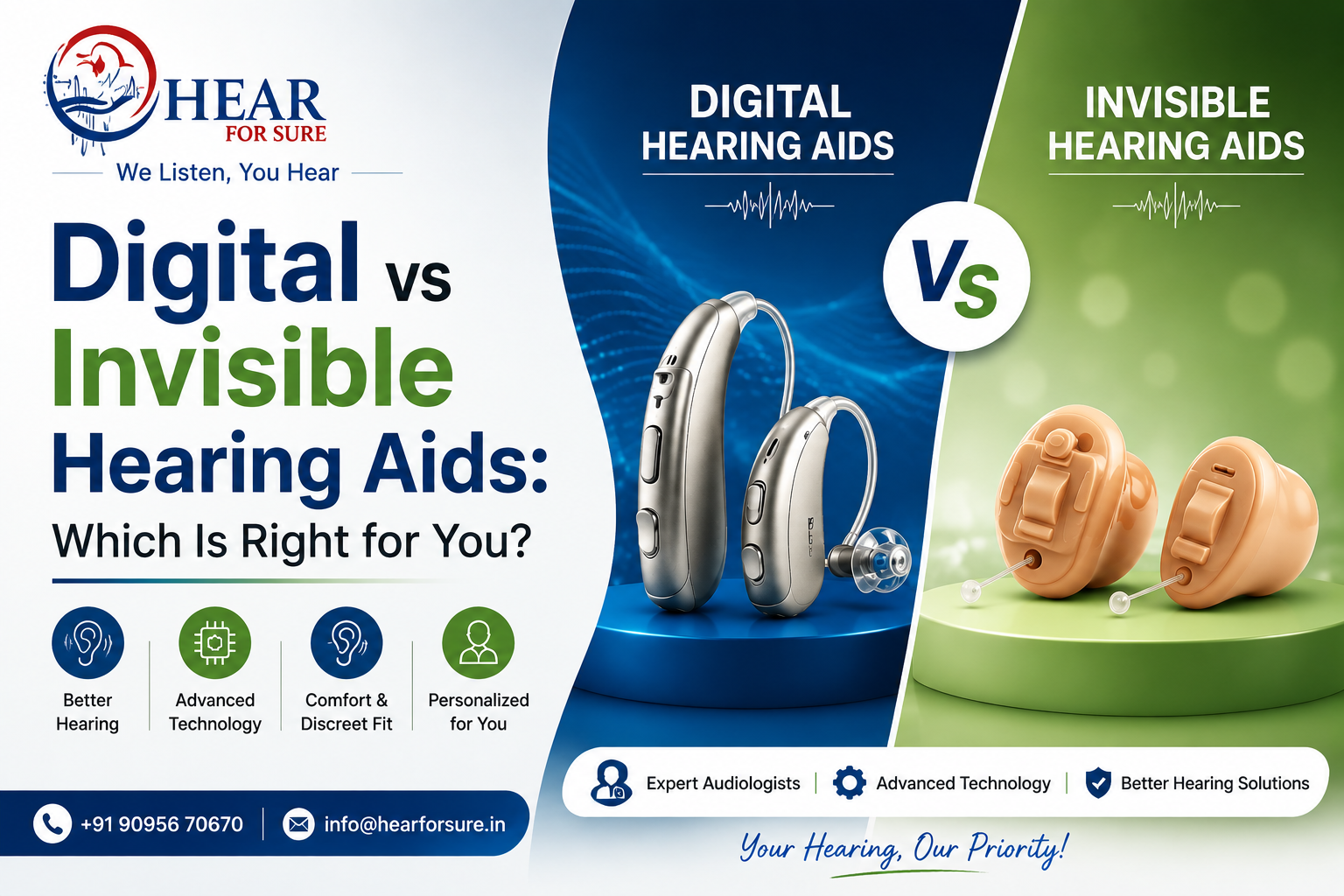
Digital vs Invisible Hearing Aids: Which Is Right for You
Hearing loss doesn’t discriminate by age it can show up at any stage of life. The good news is that today’s hearing aids are far more compact, intelligent, and comfortable than earlier generations. One question that comes up often is whether to go with a digital hearing aid or an invisible one. Each has its own strengths, and the right pick really comes down to how severe your hearing loss is, how you live day to day, and what you’re willing to spend.
This guide breaks down what separates digital hearing aids from invisible ones, what each brings to the table, and how to figure out which suits you best.
What Are Digital Hearing Aids?
Digital hearing aids rely on electronic processing to handle sound. They take incoming sound waves, convert them into digital signals, and then boost speech clarity while filtering out unwanted background noise.
Most modern digital models come loaded with features such as:
- Background noise filtering
- Bluetooth pairing
- Rechargeable battery packs
- Directional microphone arrays
- Smartphone app integration
- Tools for managing tinnitus
Because of their versatility, digital hearing aids work well across the spectrum mild, moderate, and severe hearing loss alike.
Looking for expert help choosing the right device? The team at Hear For Sure’s Hearing Aids Clinic in Lucknow can walk you through your options.
What Are Invisible Hearing Aids?
Invisible hearing aids sit deep within the ear canal, making them virtually undetectable to anyone looking at you. They’re a natural fit for people who want a hearing solution nobody notices.
The two main styles are:
- Completely-in-Canal (CIC)
- Invisible-in-Canal (IIC)
Each unit is custom-molded to match the exact shape of the wearer’s ear canal, and they’re generally recommended for mild to moderate hearing loss rather than severe cases.
Comparing the Two Options
Appearance Invisible hearing aids stay tucked out of sight inside the ear, whereas digital hearing aids come in a range of styles including behind-the-ear and receiver-in-canal designs that are more visible.
Sound Performance Because digital hearing aids have more room to house their components, they typically deliver stronger sound processing and more effective noise reduction.
Comfort Comfort is subjective. Some people find the natural, low-profile feel of invisible aids more pleasant, while others find digital aids easier to wear over extended periods.
Battery Life Rechargeable digital hearing aids tend to outlast invisible models when it comes to battery endurance.
Features Digital hearing aids commonly offer:
- Bluetooth audio streaming
- Rechargeable power
- AI-driven sound calibration
- Remote adjustment support
Invisible hearing aids, due to their small size, generally come with a more limited feature set.
Who Benefits Most from Digital Hearing Aids?
Digital hearing aids are likely the better fit if you:
- Deal with moderate to severe hearing loss
- Need strong noise-cancellation capability
- Regularly attend meetings, gatherings, or social events
- Want Bluetooth connectivity built in
- Prefer the convenience of rechargeable batteries
Explore the full range of hearing aid options here.
Who Benefits Most from Invisible Hearing Aids?
Invisible hearing aids tend to work best for people who:
- Have mild to moderate hearing loss
- Value a low-profile, discreet design
- Want their hearing aid to go unnoticed
- Don’t need an extensive list of advanced features
That said, invisible aids aren’t the right call for everyone. An audiologist’s evaluation is the best way to confirm whether they’re suitable for your specific hearing profile.
Things to Weigh Before You Buy
- How severe is your hearing loss? This is the single biggest factor in narrowing down your options.
- Your lifestyle. If you’re often in noisy, crowded settings, a feature-rich digital hearing aid may serve you better.
- Budget. Invisible hearing aids tend to cost more since they’re custom-built for each ear.
- Upkeep. Smaller devices generally need more frequent cleaning and maintenance.
- A proper hearing test. Don’t skip a consultation with a qualified audiologist before committing to a device.
If conversations or the TV have started to sound unclear, it may be worth booking a hearing test at Hear For Sore’s Lucknow clinic.
Frequently Asked Questions
Are invisible hearing aids better than digital ones?
Not automatically. Invisible aids win on discretion, but digital aids usually offer richer sound quality and more advanced features.
Can invisible hearing aids handle severe hearing loss?
Generally, no they’re built for mild to moderate cases. Severe hearing loss usually calls for a more powerful device.
Do invisible hearing aids come with rechargeable batteries?
Rechargeable technology is more common in digital hearing aids, though a growing number of invisible models now support it too.
Conclusion
No single hearing aid is right for every person. Digital hearing aids bring advanced technology, longer-lasting batteries, and richer sound quality to the table, while invisible hearing aids offer a discreet, comfortable way to hear better without anyone noticing. The smartest path forward is a consultation with an experienced audiologist who can evaluate your hearing and point you toward the device that fits your needs. Whichever type you choose, catching hearing loss early and getting professional guidance can make a real difference in your quality of life.