

Struggling to Hear Clearly? A Practical Guide to Choosing Hearing Aids in Faridabad
Do you often miss parts of a conversation, keep turning up the TV, or ask people to repeat what they said? Most of us brush these moments off. But over time, these small signs can point to hearing loss that needs a professional check.
If you’re looking for hearing aids in Faridabad, the real question isn’t which device is the cheapest or has the longest feature list. The right hearing aid is the one that fits your type of hearing loss, your daily routine, how you communicate, what feels comfortable, and what you can spend.
That’s why a proper hearing assessment is the best place to begin.
When Should You Get Your Hearing Tested?
Hearing loss rarely happens overnight. It usually builds up slowly, so many people don’t notice it until family members point it out.
Watch out for these common signs:
- You often ask people to repeat themselves
- You keep increasing the TV or phone volume
- Conversations in restaurants or crowded places are hard to follow
- Speech on phone calls sounds unclear
- You miss the doorbell, alarms or other everyday sounds
- People seem to be mumbling
- Group conversations are difficult to keep up with
- You hear ringing or other sounds in your ears
The World Health Organization recommends identifying and managing hearing loss early, because timely care helps reduce its effect on communication and daily life.
If you’ve noticed even two or three of these signs, it’s worth booking a hearing test in Faridabad with a qualified audiologist.
Why a Hearing Test Should Come Before Buying a Hearing Aid
A hearing aid doesn’t work the same way for everyone. Two people with “hearing loss” can have very different needs.
An audiologist checks the type and degree of your hearing loss and tells you whether a hearing aid is the right option. According to the NIDCD, audiologists are trained to evaluate hearing loss and to fit and dispense hearing aids.
A proper assessment helps answer questions like:
- Is your hearing loss mild, moderate, severe or profound?
- Is one ear affected, or both?
- Which sound frequencies are hard for you to hear?
- How well do you understand speech?
- Which hearing aid style would suit you best?
- Do you need a further medical check-up?
This is why buying a hearing aid just because it’s popular or low-priced often doesn’t give the results people expect.
What Types of Hearing Aids Are Available?
Today’s hearing aids come in different designs and technology levels. Here are the main types.
Behind-the-Ear (BTE) Hearing Aids
BTE hearing aids rest behind the ear and connect to an ear mould or similar part. They suit a wide range of hearing losses and come in several technology levels.
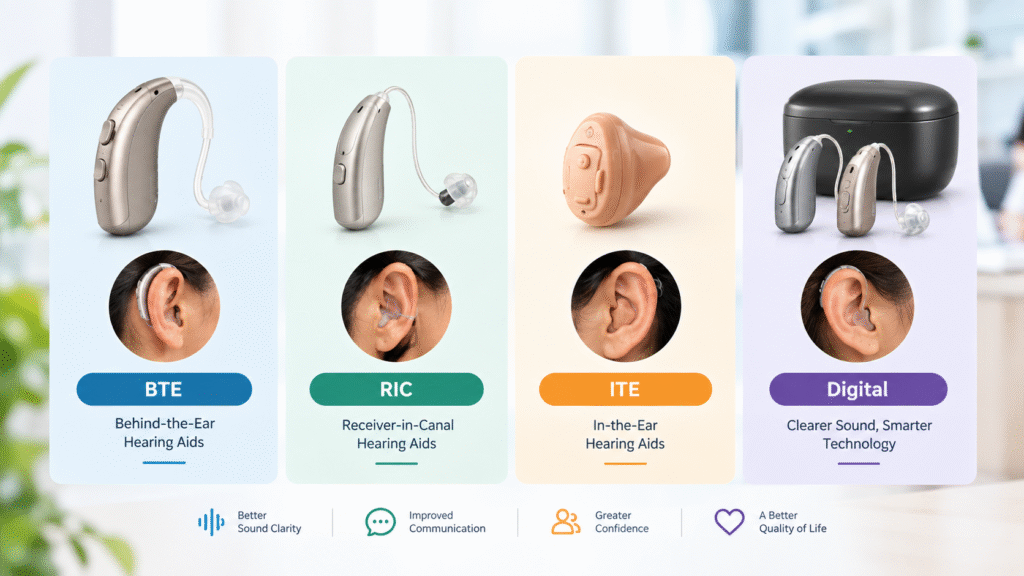
Receiver-in-Canal (RIC) Hearing Aids
RIC hearing aids are compact, with the receiver placed in or near the ear canal. Many people choose them because they look discreet and include modern features.
In-the-Ear (ITE) Hearing Aids
ITE hearing aids sit in the outer part of the ear. Their size and setup depend on your hearing needs and the shape of your ear.
Invisible and In-the-Canal Options
If you want your hearing aid to be as hidden as possible, smaller options like IIC and CIC hearing aids are worth discussing with your audiologist.
The best style for you depends on your hearing profile, ear shape, lifestyle, how easily you can handle small devices, and your personal preference, not just how it looks.
Which Hearing Aid Features Actually Matter?
Hearing aid technology has come a long way. Depending on the model, you may find features such as:
- Digital sound processing
- Background noise control
- Directional microphones
- Rechargeable batteries
- Bluetooth connectivity
- Smartphone app controls
- Multiple listening programs
- Automatic adjustment for different surroundings
Still, more features don’t always mean a better fit for you.
The NIDCD explains that choosing a hearing aid should take into account the type and severity of hearing loss along with your lifestyle and listening needs. Cost, maintenance, warranty and support also matter.
For example, someone who spends most of the day at home needs something different from a person who attends meetings, travels often, works in a noisy place or uses a smartphone all day.
How Much Do Hearing Aids Cost?
The hearing aid price can vary a lot depending on the brand, model, technology, design, features and services included.
Rather than choosing only on price, look at the full value you’re getting:
Hearing assessment + the right device + professional fitting + adjustments + after-sales support
A low-cost device may not meet your communication needs. On the other hand, a premium model may come with features you’ll hardly use.
The aim is to find the right balance between your hearing needs, useful technology, comfort and budget.

Why Professional Fitting Matters
Buying the hearing aid is only half the job.
Your device needs to be programmed based on your hearing test results. After you start using it in daily life, you may also need a few adjustments, because real-world listening often feels different from what you expected in the clinic.
Regular follow-ups help with problems like:
- Sound that feels too loud or too soft
- Trouble understanding speech
- Discomfort while wearing the device
- Connectivity issues
- Changes in your listening needs
- Questions about cleaning and maintenance
The WHO also highlights fitting, training and follow-up as key parts of good hearing aid care.
How to Choose a Hearing Aid Clinic in Faridabad
When you search online for a hearing aid clinic in Faridabad, don’t judge a clinic only by how many brands or products it advertises.
Check whether the clinic offers:
- A proper hearing assessment. Your hearing should be tested before any device is suggested.
- Professional guidance. You should get time to talk about your hearing problems and your lifestyle.
- Multiple hearing aid options. Different hearing losses may need different styles and technology levels.
- Personalised fitting and programming. The hearing aid should be set according to your hearing needs.
- After-sales support. Follow-ups, maintenance, repairs and adjustments matter for long-term use.
- Transparent pricing. Ask what’s included in the price, such as fitting, warranty, accessories or follow-up visits.
Why Hear For Sure Can Be Part of Your Search
The Hear For Sure Faridabad clinic offers hearing aid consultations, support from expert audiologists, and hearing solutions from trusted brands including ReSound, Phonak, Signia and Widex.
Faridabad is part of the wider Hear For Sure clinic network, which also includes Delhi, Gurgaon, Noida and Lucknow. Each clinic offers consultations, audiologist support and modern hearing technology.
If you’re thinking about getting a hearing aid, book a consultation first and understand your hearing needs before choosing a device.
Also Read: How Much Does a Hearing Aid Cost in Delhi in 2026
Frequently Asked Questions
What is the first step before buying a hearing aid?
Start with a professional hearing test. It shows the type and degree of your hearing loss and whether a hearing aid or another kind of care is right for you.
Are expensive hearing aids always better?
Not always. A top-end model may have features you don’t need. The right choice depends on your hearing loss, where you listen most, comfort, useful features and budget.
Can hearing aids restore normal hearing?
Hearing aids can make sounds and speech easier to hear for many people with hearing loss, but they don’t bring back normal hearing. How well they work also depends on the type and severity of your hearing loss.
Should I buy a hearing aid online?
It’s important to understand your hearing needs before you buy. For more serious or complex hearing loss, the NIDCD recommends a check-up by a hearing professional and notes that prescription hearing aids are programmed to match each person’s hearing loss.
How often should I get my hearing checked?
Get your hearing checked if you notice changes, often miss conversations, keep raising the TV volume, or hear ringing in your ears. The WHO lists these as signs that need attention.
Final Thoughts
Choosing a hearing aid is about much more than finding a small device that makes sounds louder. The right approach starts with understanding your hearing, talking about your lifestyle, picking suitable technology, and getting proper fitting and follow-up care.
If you’re looking for hearing aids in Faridabad, begin with a professional hearing assessment and ask plenty of questions before you buy. A well-matched hearing aid can make everyday conversations, phone calls, family time and social outings much easier.
Hear For Sure offers hearing care consultations and a range of hearing aid options for anyone exploring better hearing. Visit our Faridabad clinic page to learn more about our services and the hearing aid brands we offer.