
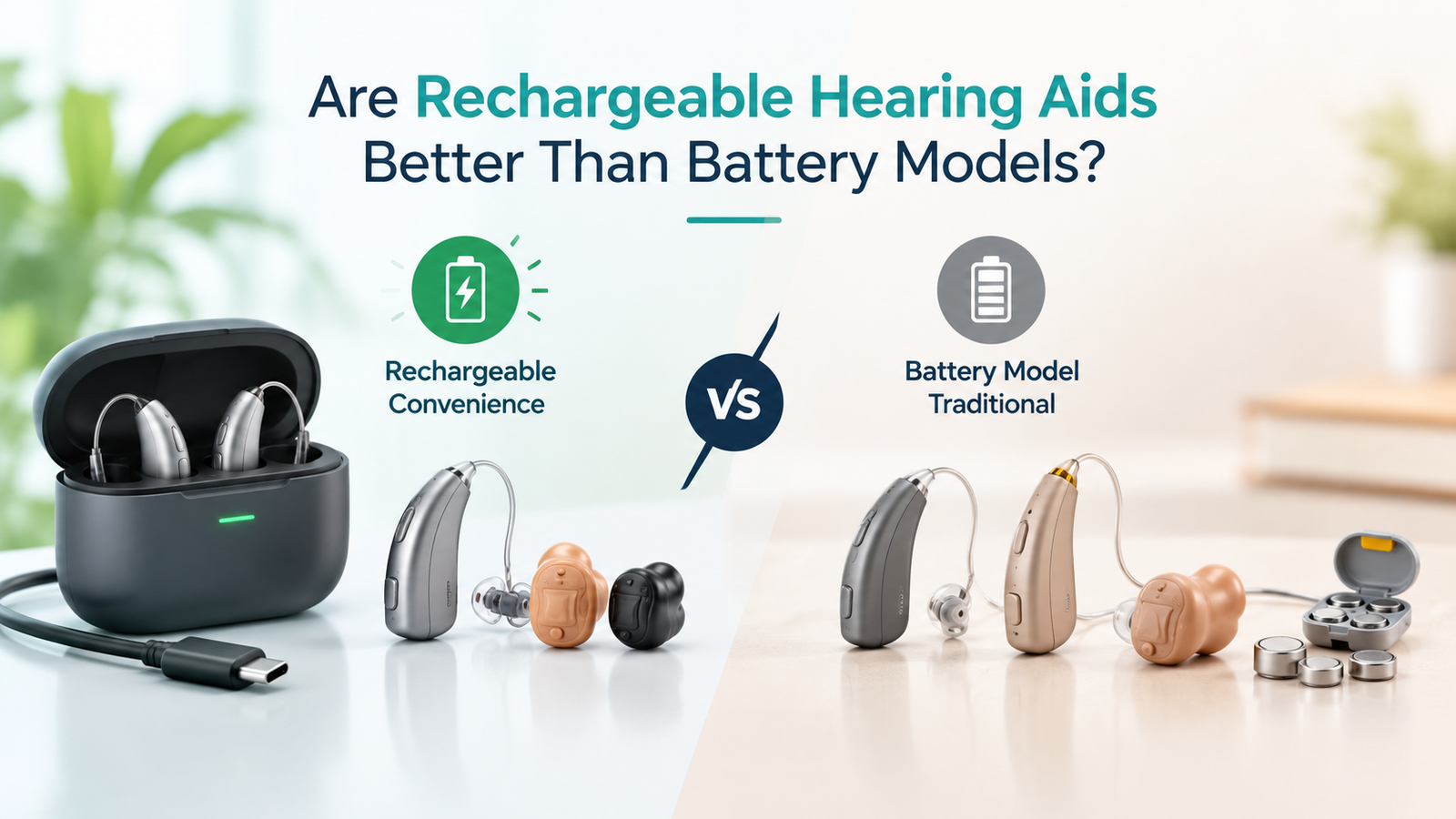
Are Rechargeable Hearing Aids Better Than Battery Models
Rechargeable hearing aids are better for most people who want convenience, as there are no tiny batteries to change and they usually last a full day on one charge. Battery-powered hearing aids are better for people who travel often, face frequent power cuts, or want a lower upfront cost. Neither is better for everyone; it depends on your routine.
Introduction
One of the first choices you face when buying a hearing aid is how it will be powered. Should you choose a rechargeable model that goes into a charger every night, or a traditional hearing aid that uses small disposable batteries?
Rechargeable hearing aids have become very popular, and many new models are now rechargeable only. But battery models still have real advantages in some situations. This guide compares rechargeable vs battery hearing aids on convenience, cost, reliability, and daily use in Indian conditions, so you can choose what fits your life.
How Do Rechargeable Hearing Aids Work?
Most rechargeable hearing aids use a built-in lithium-ion battery, similar to a mobile phone. You place them in a small charging case at night, and they are ready in the morning.
Many newer models are designed to last a full day on one charge, though heavy Bluetooth streaming uses more power. Some charging cases also hold extra charge, so you can recharge on the go without a plug point.
How Do Battery-Powered Hearing Aids Work?
Battery hearing aids use small disposable zinc-air batteries. You peel off a sticker to activate the battery, place it in the hearing aid, and replace it when it runs out.
These batteries come in standard sizes, colour-coded for easy identification:
- Size 10 (yellow): Smallest, used in tiny in-canal models
- Size 312 (brown): Common in RIC and small custom models
- Size 13 (orange): Used in larger BTE and custom models
- Size 675 (blue): Largest, used in power BTE hearing aids
A battery can last from a few days to around two weeks, depending on its size, the hearing aid, and how much you stream.
Rechargeable vs Battery Hearing Aids: Key Differences
| Feature | Rechargeable | Battery-powered |
| Daily routine | Charge overnight | Change battery every few days |
| Ease of handling | Very easy, no small parts | Needs good finger movement and eyesight |
| Upfront cost | Usually higher | Usually lower |
| Running cost | Low, mainly electricity | Ongoing cost of batteries |
| Power cuts or travel | Needs charging access or a portable case | Just carry spare batteries |
| Battery lifespan | Built-in battery wears over several years | New battery every time |
| Environmental impact | Less waste | Many used batteries to dispose of |
| Availability of styles | Growing across most styles | Available in almost all styles |
Pros and Cons of Rechargeable Hearing Aids
Pros
- No fiddling with tiny batteries
- Simple nightly routine
- Less battery waste
- Often better sealed against moisture, as there is no battery door
Cons
- Higher upfront price
- You must remember to charge daily
- Built-in battery wears over time and may need service replacement
- Harder to use if power is unreliable and you have no portable charger
Pros and Cons of Battery-Powered Hearing Aids
Pros
- Lower upfront cost
- Swap in a new battery anywhere, anytime
- Good for long trips and areas with power cuts
- Available across almost every model and style
Cons
- Small batteries can be hard to handle
- Ongoing cost of buying batteries
- Batteries can die at an awkward moment
- Batteries must be kept away from children and pets, as swallowing them is dangerous
Also Read : How Much Do Hearing Aids Cost India in 2026
Who Should Choose Rechargeable Hearing Aids?
Rechargeable hearing aids may suit you if you:
- Have shaky hands, arthritis, or weak eyesight
- Are buying for an elderly parent who may struggle with small batteries
- Stream a lot of calls, music, or TV
- Prefer a simple routine, like charging your phone
- Want to reduce battery waste
Who Should Choose Battery-Powered Hearing Aids?
Battery hearing aids may suit you if you:
- Travel often, including to remote areas
- Live where power cuts are frequent
- Want a lower upfront price
- Need a specific model or very small style that is only available with batteries
- Are comfortable handling small parts
Which Costs Less Over Time?
Rechargeable hearing aids usually cost more at the start, while battery models cost less upfront but need regular battery purchases.
Over several years, the difference often narrows. Ask your clinic to compare the total cost of both options for your chosen model, including batteries, chargers, and any future battery service for rechargeable devices.
What About Indian Weather and Power Cuts?
Heat, sweat, and humidity affect all hearing aids. Rechargeable models often have no battery door, which can help keep moisture out. Battery models need the battery door opened at night, which lets them air out.
If power cuts are common where you live, ask about a portable charging case, which holds extra charge. Some people with rechargeable hearing aids also charge from a power bank. Check with your audiologist which options suit your model.
Also Read: Signs of Hearing Loss: Symptoms, Causes & When to Seek Help
Limitations and Things to Consider
- Rechargeable batteries age. They slowly hold less charge over the years and may need replacing through the manufacturer.
- Forgetting to charge means a dead hearing aid. Build it into your nightly routine.
- Not every style is rechargeable. Some very small custom models still use batteries only.
- Swallowed batteries are dangerous. Store disposable batteries safely, away from children and pets.
How to Choose Between Rechargeable and Battery Hearing Aids
- Start with a hearing test. A complete hearing test (internal link → Hearing Test page) decides the style and power you need.
- Check your daily routine. Can you charge every night reliably?
- Test handling. Try changing a battery and placing the device in a charger at the clinic.
- Think about travel and power supply.
- Compare total cost, not just the price tag.
Leading brands like Phonak, Signia, Oticon, Widex, and ReSound offer both options across many models. You can compare them on our hearing aids page (internal link → Hearing Aids page).
When Should You Consult an Audiologist?
An audiologist can recommend the right power option based on your hearing loss, style, and lifestyle. See a doctor or ENT first if you have ear pain, discharge, or sudden hearing loss.
If you are in Lucknow, you can try both types at the Hear For Sure hearing aid clinic in Lucknow. A professional hearing assessment can help determine the type and degree of hearing loss and whether hearing aids or other hearing-care options may be appropriate.
Frequently Asked Questions
How long does a rechargeable hearing aid last on one charge?
Many rechargeable hearing aids are designed to last a full day on one charge. Heavy Bluetooth streaming uses more power, so battery life depends on model and use.
How long do rechargeable hearing aid batteries last before replacement?
Built-in rechargeable batteries slowly lose capacity over several years. When they no longer last a full day, the battery can usually be replaced through the manufacturer’s service.
Can I use rechargeable hearing aids during power cuts?
Yes, if you plan ahead. A fully charged hearing aid lasts about a day, and portable charging cases or power banks can recharge it when electricity is unavailable.
How long do disposable hearing aid batteries last?
Disposable hearing aid batteries last from a few days to around two weeks. Smaller batteries run out faster, and Bluetooth streaming also shortens battery life.
Conclusion
So, are rechargeable hearing aids better than battery models? For most people, especially seniors and heavy streamers, rechargeable hearing aids offer more convenience and less hassle. Battery models remain a smart choice for frequent travellers, areas with unreliable power, and those who want a lower upfront cost. The best choice depends on your hearing, your hands, and your daily routine. A hearing assessment at Hear For Sure can help you try both options and decide which one fits your life